


Pokemon TCG Investing in Malaysia
As the Pokémon Trading Card Game (TCG) evolves from a playground pastime into a billion-dollar asset class, the frenzy in Southeast Asia, particularly in Malaysia and Singapore, has reached a fever pitch. Pokemon TCG investing in Malaysia has made some see gold in these glossy cardboard squares, while others are discovering the devastating reality of a speculative bubble.
Below is a comprehensive deep dive into the state of Pokémon TCG investing, the social fallout, and how it compares to the fleeting “Labubu” craze or the once super-famous Magic: The Gathering (MTG) card craze.
The New Gold Rush: From Childhood Hobby to High-Stakes Hustle
In 2026, the Pokémon TCG is no longer just a game. It is a market fueled by a volatile mix of genuine collectors, strategic investors, and aggressive scalpers. In Malaysia, local card shops (LGS) and online platforms such as Shopee and Carousell have become battlegrounds for this growing trend.
The “bandwagon” effect is real. Driven by viral TikTok clips of “god packs” and headlines of million-dollar sales (like the US$16.5 million Pikachu Illustrator), many Malaysians are pouring their savings into Pokémon boxes, often without understanding the underlying mechanics of rarity and liquidity. But again, everyone seems to know best, thanks to TikTok and other social media information.
Those with big money are seen doing well, simply because they have the money to roll or invest, often showing off their pallets of unopened boxes. And there are those who create blind packs ranging from hundreds to thousands of Ringgit.
The Rip and Ship Blind Pack Syndrome
The “blind pack” trend in Malaysia has evolved this casual hobby into a high-stakes digital spectacle, largely driven by the “rip and ship” culture on social media platforms such as TikTok, Instagram, and Shopee.
The “Rip and Ship” Phenomenon
Social media has revolutionised how Malaysians purchase Pokémon cards through Livestream Openings.
-
The Process: Instead of receiving a sealed product, buyers purchase packs during a live stream. The jockey or host “rips” (opens) the packs on camera and “ships” only the valuable “hits” or the entire contents to the buyer.
-
Engagement: This format is highly popular on TikTok Live and Shopee Live because it provides instant gratification and allows the audience to share in the excitement of a rare “pull”.
-
Community Interaction: Streamers often build a loyal following by interacting directly with buyers, reacting to rare cards (like a Charizard or Umbreon), and sometimes adding “bonuses” to the shipment.
The Gamblification of Collecting
Experts and community members have raised concerns that this trend mirrors gambling behaviours.
-
Dopamine Hits: The “blind” nature of these packs taps into the brain’s reward system. The uncertainty of what is inside a pack creates a dopamine-driven cycle that can lead to impulsive overspending.
-
High Stakes: With rare cards potentially worth hundreds or even thousands of ringgit, the lure of a “big win” encourages people to buy multiple packs or even entire booster boxes in one sitting.
-
Financial Risk: The accessibility of these streams means people can spend large sums of money in minutes. While some research suggests no direct statistical link to clinical problem gambling for all players, the “live” element adds a layer of social pressure and urgency.
Market Hype and Social Media Influence
The trend is further fueled by viral success stories and massive local events.
-
Viral Success: News of Malaysian collectors selling their entire collections for millions of ringgit (e.g., one collector sold his stock for RM1.87 million in late 2025) has convinced many that Pokémon cards are a “get rich quick” investment.
-
FOMO (Fear of Missing Out): Platforms like Instagram showcase “camping out” culture. Recently, in April 2026, collectors were seen lining up overnight in Damansara Jaya just to secure the latest “Ascended Heroes” expansion set.
-
Secondary Market: Facebook groups and Carousell serve as the primary hubs for trading and selling individual cards from these blind packs, sustaining a constant cycle of hype and profit-seeking.
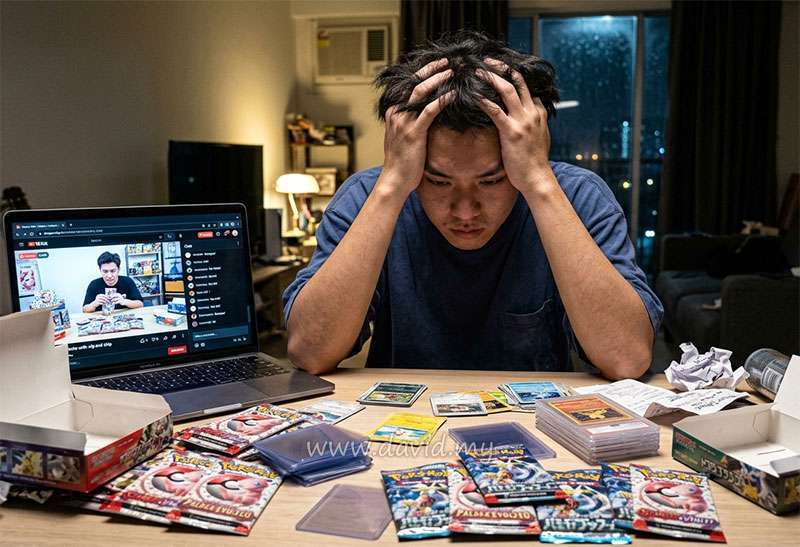
What is Kumpau?
In the world of Malaysian “rip and ship” livestreams, Kumpau (or Kempau) is a slang term for a “failed” opening in which a buyer receives no valuable cards.
This word actually originates from the Hokkien word for “dry up” or “shrivel.” It was popularised by local anglers to describe a fishing trip where they caught nothing. In the Pokémon TCG context, it has a very specific and often painful meaning for the community, especially when you spent hard-earned money.
What It Means to “Kumpau”
-
The “Zero-Hit” Experience: It occurs when a buyer pays for booster packs, and upon being opened on camera, they contain only common or uncommon cards with no “hits” (Secret Rares, Full Arts, or high-value holos).
-
The Social Stigma: On TikTok and Shopee Live, viewers often use the term in the chat to tease a buyer or the host when a long streak of “green code” or non-holo packs occurs.
-
The Financial Sting: Because many buyers are investing purely for profit or to find a “chase card” to flip, a “Kumpau” session represents a total loss of the capital spent on those packs.
The Role of “Kumpau” in Social Media Culture
-
The Jockey’s Burden: Hosts (Jockey) often feel pressure to “break the Kumpau” by offering a free pack or a “consolation” prize to a buyer who has spent hundreds of ringgit and received nothing of value.
-
Building Engagement: Paradoxically, “Kumpau” moments can drive engagement; the tension of a buyer losing money creates a spectacle that keeps viewers watching to see if the “luck” will eventually turn around.
-
Emotional Toll: For those “investing blindly” or borrowing money to buy packs, a “Kumpau” result is more than just bad luck; it can be the catalyst for financial ruin and debt reported in local news. Some players end up borrowing money or spending more than they can afford.
The Social Impact: Debt, Despair, and “Ah Longs”
The darker side of this trend is surfacing in local news. Reports from the local media have emerged of a 23-year-old Malaysian falling into financial ruin. Steered by FOMO, he borrowed nearly RM30,000 from 14 different loan sharks (Ah Longs) to fund his “collectables business” focusing on Pokémon and Labubu. When the hype cooled, and the stock didn’t move, he was left with plastic toys and crushing debt.
This “get rich quick” mentality has fractured families and led individuals to borrow from friends and relatives to “buy the dip” on sets that eventually became overprinted and lost value. The social fabric of the hobby is also fraying; the aggressive nature of scalping—where bots and “insider” groups clear out retail shelves—has made it nearly impossible for children and casual players to enjoy the game at MSRP (Manufacturer’s Suggested Retail Price).
That is just one of the known public cases, as there are many others out there, unreported and sometimes shared on social platforms like Instagram, TikTok and Facebook. I have heard of one where the investor borrowed family money in the hundreds of thousands to invest in just Pokémon cards and is currently stuck with a lot of stock.
High-Profile Debt and “Ah Long” Cases Involving Pokémon and Labubu
Here are the links to the news articles discussed, highlighting the financial risks and significant events in the Malaysian Pokémon TCG and collectables market:
-
The RM30,000 / RM93,000 Debt Case (May 2025):
-
Labubu and Bearbricks RM200,000 Debt Discussion:
Theft and Scams
-
Nurse Stealing Cards to Pay Debt (May 2024):
-
RM535,000 Collector Scams (February 2025):
Major Local Success Stories
-
RM1.87 Million Collection Sale (October 2025):
-
RM4.4 Million Collection Commission Offer (May 2026):
Pokémon vs. Labubu: A Tale of Two Trends
While Pokémon has a 30-year legacy, the Labubu (Pop Mart) craze serves as a cautionary tale for Southeast Asian investors.
-
The Labubu Spike: Labubu dolls saw a meteoric rise thanks to celebrity endorsements (like Blackpink’s Lisa). Prices for “blind boxes” skyrocketed overnight.
-
The Sudden Crash: Unlike Pokémon, which has a functional game and deep nostalgia, Labubu relied almost entirely on “hype-utility.” Once the social media trend shifted, many resellers in Malaysia were left with “bricks”—stock they couldn’t sell for even half the purchase price.
-
The Lesson: Pokémon has more staying power, but “mass-market” modern sets are increasingly behaving like Labubu; they are over-hoarded, leading to a surplus of “sealed” inventory that prevents future scarcity.
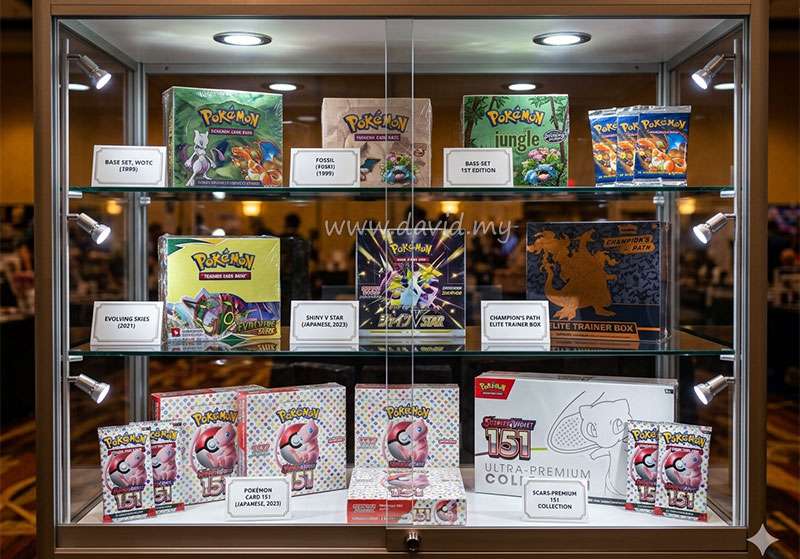
Investment Breakdown: Pokemon Boosters to Pallets
If you are considering “investing” in the TCG, it is vital to understand the entry points and their inherent risks.
| Investment Type | Strategy | Pros | Cons |
| Booster Packs | Buying loose packs to “rip” or hold. | Low entry cost; high “gambling” thrill. | High risk; loose packs can be weighed or tampered with; low ROI for modern sets. |
| Booster Boxes | Sealed boxes of 36 packs. | The “Gold Standard” of investing; easier to store and sell than loose packs. | Requires physical storage space; susceptible to moisture/damage; high initial cost. |
| Crates & Pallets | Buying “Cases” (6 boxes) or full pallets. | Lowest price per unit; targeted at high-net-worth “whales.” | Immense storage needs; very difficult to liquidate quickly in the local Malaysian market. |
| Individual Cards | Buying “Raw” singles (ungraded). | Allows for targeted “sniping” of cards you believe will rise. | Condition is everything; “Near Mint” is subjective; high risk of fakes on platforms like Facebook. |
| Graded Slabs | Cards authenticated by PSA, BGS, or CGC. | Fixed condition; “pop report” (scarcity) is known; it commands the highest premiums. | Grading fees are expensive; shipping to the US from SE Asia is risky; the market for 9s and 8s can be thin. |
*Investing = gambling to some
The Pros and Cons of Pokémon TCG Investing
The Pros
-
Global Liquidity: A high-value Pokémon card is like “nerd currency”; it can be sold in Kuala Lumpur, Singapore, London, or Tokyo.
-
Historical Growth: Historically, vintage (Wizards of the Coast era) sets have outperformed many traditional stocks over a 20-year horizon.
-
Nostalgia Armour: The brand is the most profitable media franchise in history, providing a “floor” that many other collectables lack.
The Cons
-
The “Future Inventory” Problem: Because everyone is now “investing” and keeping boxes sealed, the modern sets (Scarlet & Violet era) may never become truly rare. Only select sets or expansions may be highly investable, but not all.
-
High Friction Costs: Between selling platform fees (15–20%), shipping, and insurance, you need a 20-25% markup just to break even. Anyhow, you see sellers trying to undercut prices on these online platforms, and you wonder how they earn a profit.
-
The Scam Factor: Malaysia has seen a rise in high-quality “proxy” (fake) cards that can fool even intermediate collectors. This is still considered relatively new in the market, but seasoned collectors are aware of it. Many new or inexperienced investors and resellers get caught in this.
-
Blind Investment: Buying based on “FOMO” (Fear Of Missing Out) rather than market data often leads to buying at the “top” of the market. I have personally seen so-called ‘influencers’ shift to Pokémon TCG just to get into the game for followers and views. One of them is, sadly, someone I met 10 years ago here in Malaysia.

Conclusion
I would conclude that most people should treat Pokémon as a hobby first. The “winners” in this market are usually those who bought because they loved the art or the game, not those who took out a loan to buy a pallet of “hype” boxes. If you can’t afford to see the value of your cards drop to zero, you aren’t investing—you’re just gambling.