

A Complete Guide to the Best Dive Sites in Aqaba, Jordan
Jordan’s only coastal city sits at the very northern tip of the Red Sea, nestled between Israel, Egypt, and Saudi Arabia lies one of the most underrated diving destinations on the planet. Here is a complete guide to the best dive sites in Aqaba, Jordan, for anyone planning to scuba dive this part of the world.
The water is warm, the visibility is stunning (often exceeding 30 metres), the coral is healthy, and there are almost no crowds. Not the big resort-town masses you find in Sharm El Sheikh or Hurghada. Just you, the reef, and an extraordinary variety of marine life.
I’ve put together this guide to help you plan your diving trip to Aqaba properly. You can be a complete beginner, casual diver or a seasoned technical diver, Aqaba has something genuinely special waiting for you. I’ve also covered how to get here, where to dive from, and what’s coming up on the event calendar — including a big one you won’t want to miss.
If you want a broader background on diving the Red Sea in general, have a read of my earlier piece on diving in the Red Sea, which I did on MalaysiaAsia. It’ll give you some useful context before we dive into the specifics of Aqaba.
Why Dive in Aqaba?
The Gulf of Aqaba is one of those places that scientists genuinely get excited about. The coral here is remarkably resistant to bleaching — a combination of cooler upwellings, the desert climate, and good water circulation keeps conditions stable year-round. There are over 500 species of coral (150 hard, 350 soft), more than 1,200 species of fish, and countless invertebrates tucked into every crevice.
Water temperatures range from around 20–21°C in the winter months to 26–27°C in summer, so you’ll want a 3mm wetsuit at minimum year-round, and a 5mm if you’re diving multiple times a day in cooler months. Visibility is consistently excellent — expect 25 to 40 metres on most dives.
The best time to visit is October and November, when the sea is still warm from summer, but the scorching desert heat has eased off. April and May are also excellent. That said, Aqaba is genuinely a year-round destination.
The 8 Best Dive Sites in Aqaba

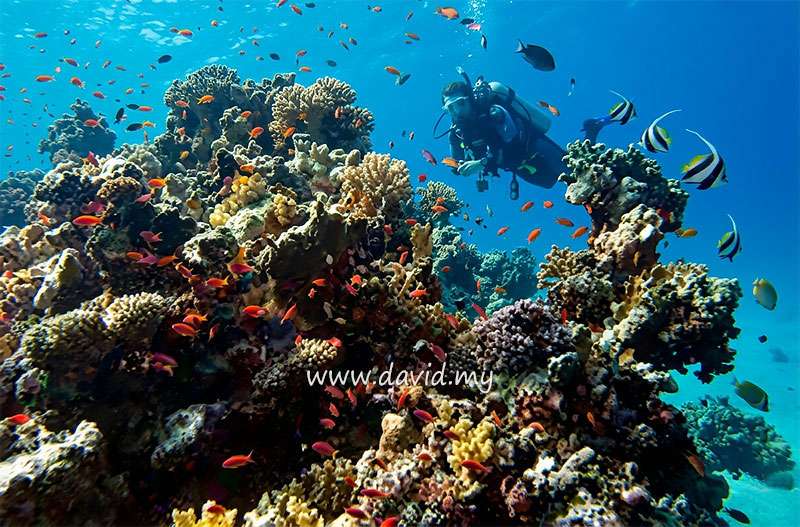
1. Japanese Garden — The Reef Diver’s Favourite
Average Depth: 5–18 metres Certification Required: Open Water (beginner-friendly) Type: Coral reef, drift dive
If there’s one dive site in Aqaba that earns the label “unmissable,” this is it. Japanese Garden gets its name from the large coral heads that bear a passing resemblance to traditional Japanese pagodas — though once you’re in the water, you’ll be too distracted by the sheer abundance of life to dwell on the metaphor.
The dive starts in shallow water and gently slopes down to a vibrant coral bed where enormous schools of anthias swirl around the pinnacles in the sunlight. It’s a genuinely beautiful sight. Hawksbill turtles are commonly spotted here, as are barracuda, grouper, royal angelfish, moray eels, and some impressively large clam shells. The site has two boat moorings and is accessible from shore, making it ideal for snorkelers and divers of all levels.
I’ve done this dive multiple times, and it never gets old. The soft corals in the shallower sections are particularly photogenic in the early morning light.

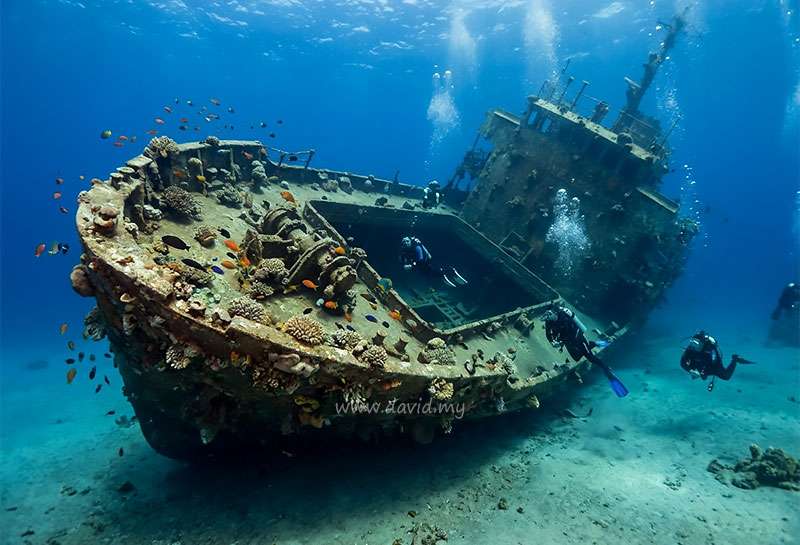
2. Cedar Pride Wreck — Aqaba’s Most Iconic Dive
Average Depth: 10–27 metres Certification Required: Open Water (advanced recommended to make the most of it) Type: Shipwreck
The Cedar Pride is the jewel in Aqaba’s crown, and it’s a wreck with a genuinely good backstory. The Lebanese freighter caught fire in 1982 while at anchor in Aqaba harbour. Two crew members lost their lives, and the ship was left as a floating hulk for years, with nobody willing to foot the bill for the harbour fees. It was eventually King Abdullah II himself — a keen diver — who arranged for it to be deliberately scuttled as an artificial reef. On 16 November 1985, the Cedar Pride was sent to the bottom.
She lies on her port side across two reefs, with her uppermost starboard side at around 10 metres and the deepest point at about 27 metres. The 75-metre-long wreck is largely intact and absolutely stunning to swim around. The crow’s nest has become a literal hanging basket of soft corals, sea fans, and marine growth — one of the most photographed spots in the Red Sea. There’s a swim-through under the hull at 26 metres that’s not to be missed.
Marine life includes hawksbill turtles (almost reliably present), large Napoleon wrasse, lionfish, scorpionfish, moray eels, ghost pipefish, and occasionally nudibranch. It’s also a brilliant night dive. You can do this one from the shore or by boat — the surface buoy is visible from the beach.

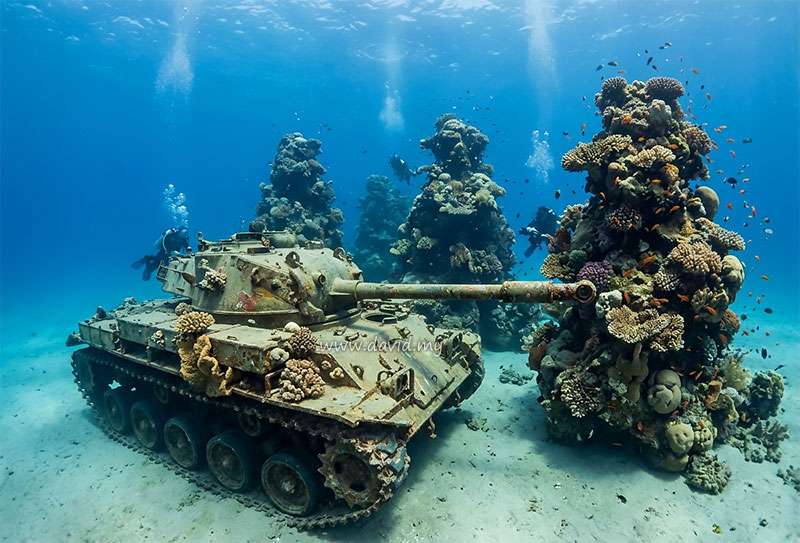
3. The Tank and Seven Sisters — History Meets Colour
Average Depth: 6–20 metres Certification Required: Open Water (beginner-friendly) Type: Artificial wreck + coral pinnacles
This is a double feature, and one of Aqaba’s most popular dives for good reason. The Tank is an old American M42 tracked anti-aircraft vehicle that was scuttled by the Jordan Royal Ecological Society in 1999 at a distance of around 20 metres. It’s now well-colonised with soft corals, and home to groupers, moray eels, trunkfish, lionfish, and scorpionfish. Underwater photographers in particular love this site.
A short swim from the Tank, you’ll find the Seven Sisters — a cluster of seven impressive coral pinnacles rising from a sandy seabed. Depths here range from just 6 to 18 metres, making it ideal for beginners. The pinnacles are absolutely teeming with life: butterflyfish, parrotfish, anthias, fusiliers, damselfish, and the occasional sea turtle. Visibility here is reliably excellent, and it’s a great site for underwater photography of both macro and wide-angle subjects.
These two sites complement each other perfectly, either in a single dive or in two separate dives on the same day.

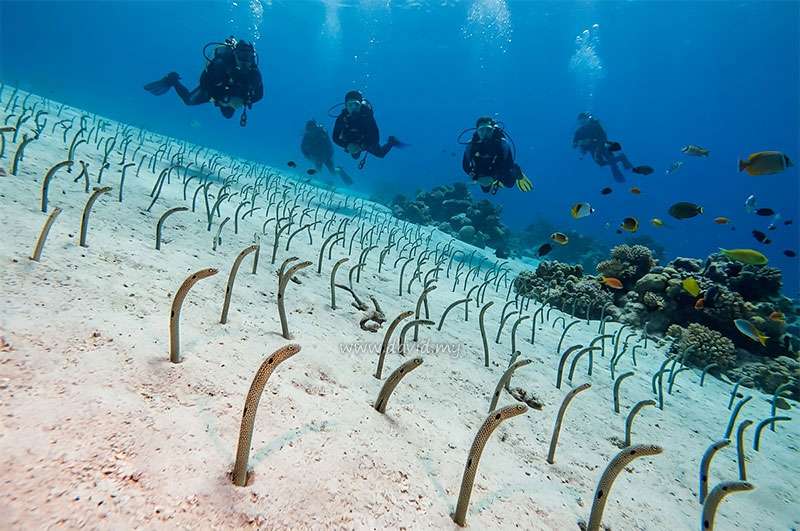
4. Eel Garden — Aqaba’s Best-Kept Muck Diving Secret
Average Depth: 7–20 metres Certification Required: Open Water Type: Muck diving, critters, seagrass
If you’re a macro photographer or the kind of diver who gets more excited by a ghost pipefish than a big reef, the Eel Garden should be near the top of your list. The name gives away the most obvious attraction — garden eels protruding from the sandy bottom in impressive numbers — but this site is so much more than that.
Crossing the sand and heading left from the shore, you’ll find coral heads hosting yellow-mouthed moray eels and anemones, and a rich seagrass bed sheltering juvenile fish, sea slugs, and seahorses. Scattered through the site are scorpionfish and lionfish doing their best to look like rocks. But the real gem is the pinnacle at around 7 metres — a genuine photographer’s paradise, surrounded by anthias and black corals, with a busy cleaning station managed by a resident giant moray and his team of banded boxer shrimp. Look carefully, and you’ll find frogfish.
Come back at night, and the whole scene transforms: toadfish appear from nowhere, red swimming crabs emerge from the pinnacle’s recesses, and the seagrass comes alive. This is classic muck diving at its finest — no marquee animals, just patience rewarded.

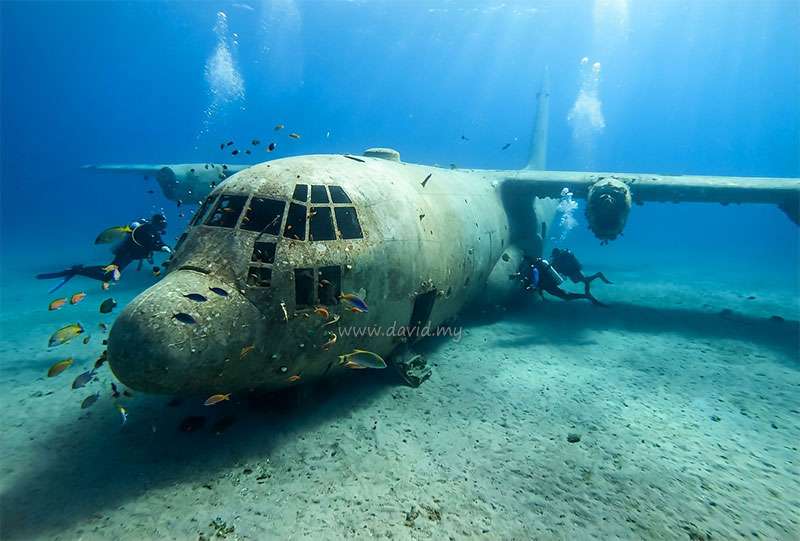
5. C-130 Hercules — The Plane You Can Snorkel On
Average Depth: 10–18 metres Certification Required: Open Water (snorkeler-friendly in the shallows) Type: Aircraft wreck
In November 2017, a Lockheed C-130 Hercules transport aircraft was deliberately sunk just off Aqaba’s south beach, and it has quickly become one of the most talked-about dive sites in the Red Sea. The plane sits flat on its belly on a sandy seabed, with the tip of the enormous tail fin rising to just below the surface — you can see it from a boat.
At 30 metres long with a wingspan of 40 metres, this is an impressive wreck even by aircraft standards. Divers can swim through the fuselage, explore the cockpit, pass through the cargo hold, and emerge through the wings. The site is close to both the Cedar Pride and the Tank, and can be combined with them for a full day of wreck exploration. At its maximum depth of around 18 metres, it’s accessible to Open Water divers, but advanced-certified divers enjoy lingering longer and exploring the deeper sections. Marine life is still building around the relatively young wreck, but fish and coral growth are already starting to claim it.
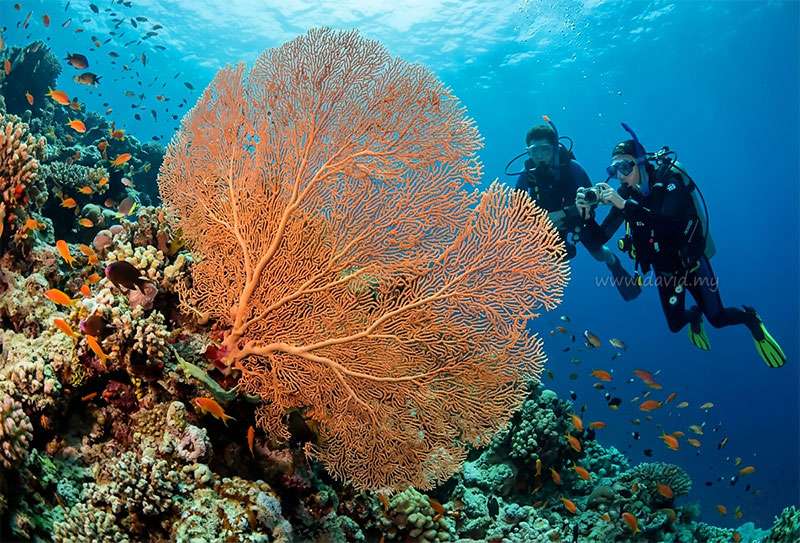
6. Gorgone I — Fans, Pinnacles, and a Cleaning Station
Average Depth: 5–18 metres Certification Required: Open Water Type: Coral reef, pinnacles
The name comes from the gorgonian fan corals — those enormous, imposing, snake-haired sea fans — and there’s a spectacular one at this site that earns every bit of the mythological reference. Gorgone I features three coral pinnacles, each with its own distinct ecosystem and character. The central pinnacle hosts one of the busiest and most fascinating cleaning stations in Aqaba.
This dive rewards slow, attentive diving. The coral coverage is exceptional, the fish life is diverse, and the sheer visual beauty of the site makes it a firm favourite with underwater photographers. A passage runs along the entry, hiding a variety of shy and unusual creatures in small cave formations. The maximum depth is around 18 metres, making it suitable for newly certified divers, but experienced divers will find plenty to keep them occupied too.

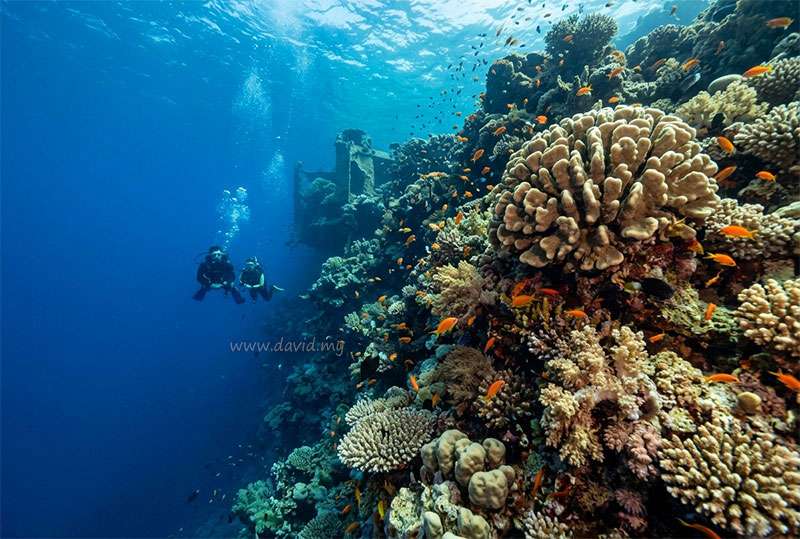
7. The Power Station — The Wall That Means Business
Average Depth: 5–40+ metres (to 200+ metres at maximum) Certification Required: Advanced Open Water minimum; technical certification recommended for deeper dives Type: Wall dive, drift dive
The Power Station is Aqaba’s only true wall dive, and it’s a serious site. Located about 5 km south of town and accessible only by boat, the dive begins over a lively coral plateau starting at 5 metres before following the wall downward. Around 30 metres, the bottom simply drops away — the 100- and 200-metre depth contour lines hit the coast right here.
This is where Aqaba takes on an entirely different character. Unlike the sheltered South Beach sites, the Power Station regularly sees larger pelagic animals. Sharks are spotted here more than almost anywhere else in Aqaba’s waters. Large hump-head wrasse, big moray eels, sea turtles, stingrays, and schools of barracuda patrol the wall, while the soft and hard corals on the wall itself are some of the most dramatic in the region.
Advanced divers can drift north to south along the wall, with good safety stop options in the shallows. Technical divers will find the site worth multiple trips exploring increasingly deep sections. Night dives here are a completely different experience — the wall effectively becomes a new site after dark.
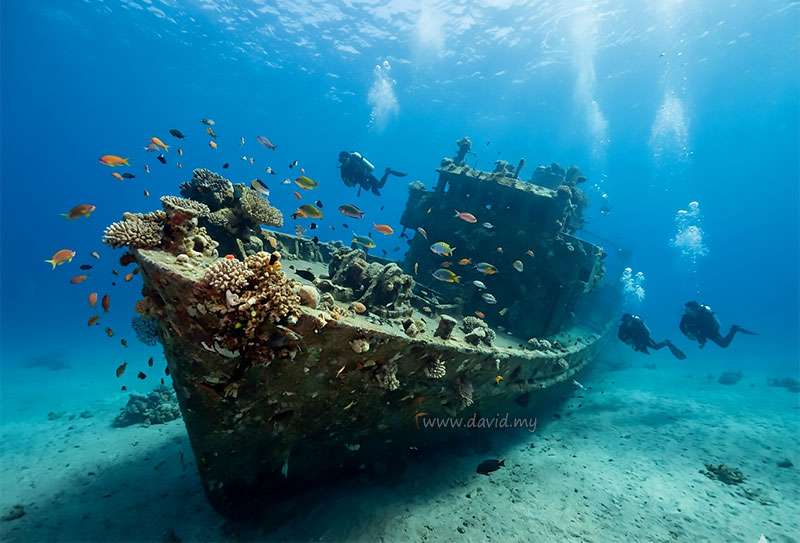
8. Taiyong Wreck — The Deep Shipwreck for the Bold
Average Depth: 35–57 metres Certification Required: Advanced Open Water with Deep Diver speciality; technical certification for deeper sections Type: Technical wreck dive
This is a site for experienced divers only, and it earns its reputation. The Taiyong (which translates as “Sunrise”) is a large crane barge that was once used to offload ships in the Gulf of Aqaba. Technical divers discovered her in 2004. At 36 metres long with a 27-metre crane arm, she sits on her starboard side with her highest point at 35 metres and her deepest at 57 metres — well beyond recreational limits and requiring proper decompression planning.
The Taiyong has less coral coverage than the Cedar Pride, given its depth, but what it does have is dramatic: gorgonian fans and black corals have colonised the crane arm as it plunges into the deep blue, and schools of glassfish swirl through the interior while lionfish hunt them from the shadows. The crane itself — broken in the accident that eventually sank her, now draped in marine growth — is a genuinely spectacular sight. Divers who enjoy Tec/Rec crossover diving will find this site endlessly interesting. Buoyancy and gas management need to be on point before attempting this one.
Dive Resorts and Accommodation in Aqaba
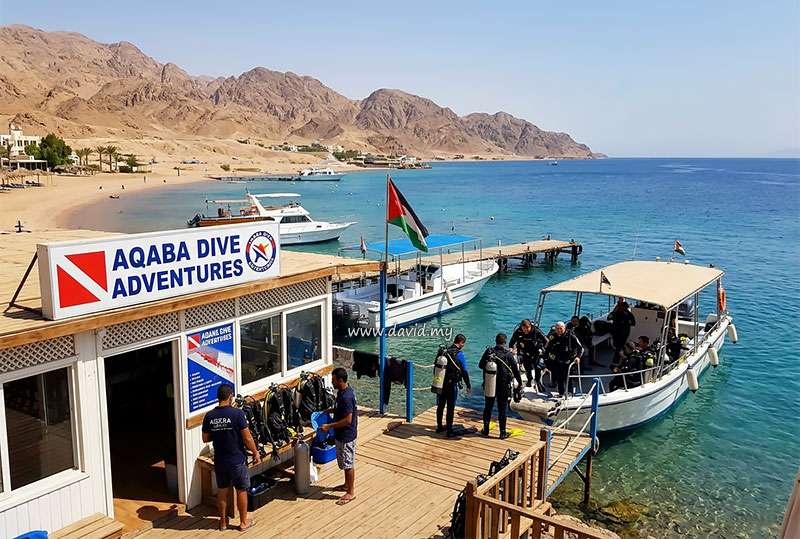
Aqaba is not yet a heavy-duty dive resort destination in the way that, say, some of the dive-centric islands of Southeast Asia are. But there are some solid options for divers who want to base themselves specifically for diving.
Arab Divers operates a 20-room facility on a hillside overlooking the Red Sea, just south of town. It’s purpose-built with divers in mind — rooms are comfortable, the setting is peaceful, and there’s an on-site training pool. It’s as close to a dive resort experience as Aqaba currently offers.
Aqaba Adventure Divers also has on-site accommodation along the South Beach coast. The setting is quieter than the town, with sea views and easy access to the house reef and nearby sites.
For those based in the main hotels in Aqaba city, there are several good options, including Kempinski Hotel Aqaba and InterContinental Aqaba. Most dive centres will arrange pickup, so staying central doesn’t limit your diving options.
As for liveaboards, Aqaba does not currently have a well-established liveaboard industry as Hurghada and Marsa Alam do in Egypt. The coastline is compact, and most sites are accessible from the shore or by day boat. A few operators offer multi-day boat packages, and it’s worth checking directly with the major dive centres (below) for current liveaboard availability, as this sector is steadily developing.
Three Dive Operators Worth Knowing
There are a number of dive centres along Aqaba’s south beach, and standards are generally good. These three have earned consistently strong reputations with visiting divers.
Arab Divers is a PADI 5-Star IDC TEC REC centre located on the south beach near the Marine Park Visitor Centre. One of the longer-running operations in Aqaba, they cover the full range from Open Water instruction through to technical diving, with Nitrox and Trimix available. Small groups, experienced instructors, and the on-site accommodation make this a good all-in-one option. Web: arabdivers.jo
Deep Blue Dive Center is a large, well-equipped PADI 5-Star centre based at Tala Bay, with a two-boat fleet (including a 24-metre vessel with full facilities). They’re strong on underwater photography, guiding, and conservation, and are Green Fins members. Good for photographers and divers who want reliable boat logistics. Web: deepbluedivecenter.com
Coral Garden Diving Center is a PADI 5-Star IDC centre located in the heart of Aqaba, just steps from the water. They’re the official Mares distributor for Jordan, offer full technical diving through to rebreather (CCR) certification, and are well-reviewed for their hospitality and professional standards. Their daily boat trips cover an excellent range of sites. Web: dive-inaqaba.com

How to Get to Aqaba
Flying Into Jordan
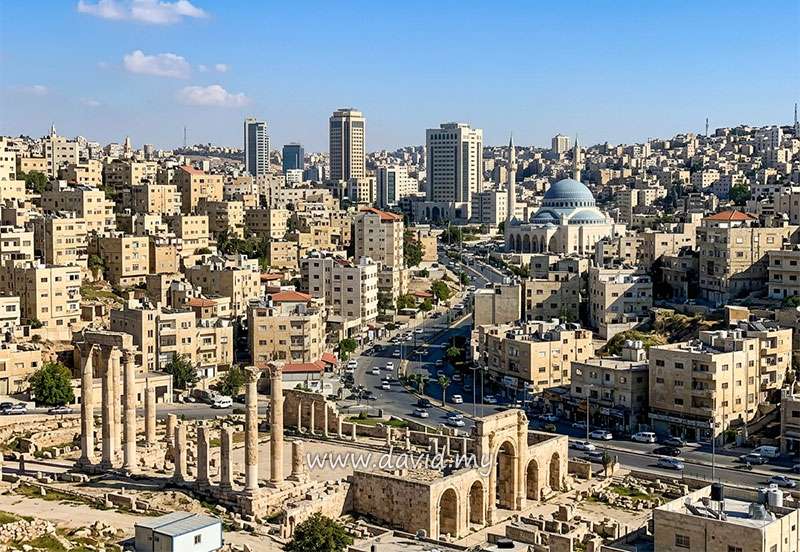
Most international flights into Jordan arrive at Queen Alia International Airport (AMM) in Amman, the capital. This is the main hub served by Royal Jordanian (the national carrier) and a wide range of international airlines, including Emirates, Turkish Airlines, British Airways, and Qatar Airways. Connections from Europe, Asia, and the Americas are well-established, and the airport has modernised significantly over the years.
Jordan also has a smaller international airport at Aqaba itself — King Hussein International Airport (AQJ) — which serves some regional and charter flights. If you can find a direct flight into AQJ, that’s obviously the most convenient option, but availability is limited.
Most visitors flying into AMM will need to connect south to Aqaba. The Jordan Pass (worth getting if you plan to visit Petra) includes your visa on arrival, which saves you the standard entry fee.
Getting from Amman to Aqaba
The distance between the two cities is around 330 kilometres, and there are a few ways to cover it.
By Royal Jordanian domestic flight is the quickest option — the flight from Amman to Aqaba (AMM to AQJ) takes under an hour, and there are usually several daily departures. It’s not always cheap, and by the time you factor in airport time at both ends, the time saving over the bus narrows considerably. That said, if you’re pressed for time or simply don’t fancy a long drive, it’s a perfectly decent option.
By JETT Bus is the most popular choice for independent travellers. JETT (Jordan Express Tourist Transport) runs comfortable air-conditioned coaches from Amman to Aqaba, departing from multiple points in the city, including the Abdali and 7th Circle stations. The journey takes around 4 to 5 hours and costs roughly 10 JOD (around USD 14). Buses run throughout the day, and I’d recommend booking at least a day in advance. The JETT buses are clean, have toilets on board, and make a rest stop along the way. This is honestly a perfectly comfortable journey through some fine desert scenery.
A rental car is the most flexible option if you plan to explore Jordan beyond just Aqaba. The highway between Amman and Aqaba is of good quality and straightforward to drive. Budget around 4 hours of driving time. Rental cars are widely available in Amman, including at the airport. This is also a great option if you want to stop off at Wadi Rum (around an hour north of Aqaba) or Petra en route.
By private taxi or transfer costs more than the bus — expect to pay at least USD 100 for a private taxi from Amman — but it is convenient for groups or those with a lot of dive gear.

One More Thing: ABOFA 2026
If you’re planning a visit to Aqaba this year and can time it right, there’s something big happening that the diving community should know about.
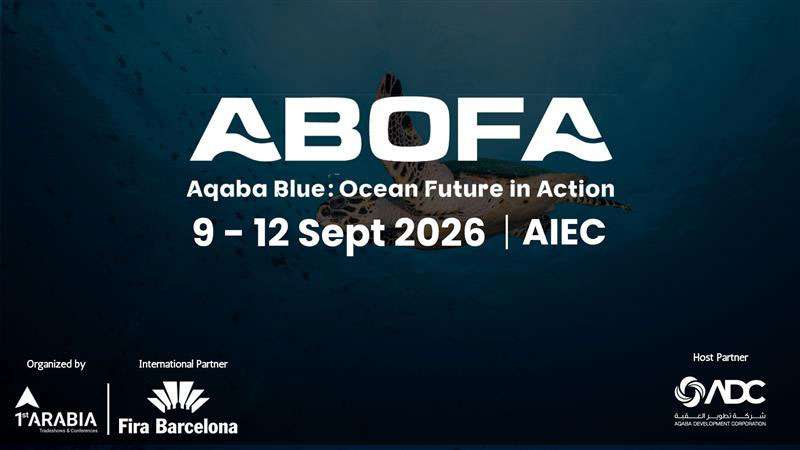
ABOFA – Aqaba Blue Ocean: Future in Action is an international event dedicated to the blue economy, taking place from 9 to 12 September 2026 at the Aqaba International Exhibition Center (AIEC). The event is expected to bring together around 4,000 participants from 25 countries, positioning Aqaba at the centre of a growing global movement around marine sports, underwater exploration, and the blue economy.
Organised in partnership with Aqaba Development Corporation (ADC), ABOFA is designed to become the regional flagship event and key meeting point for the diving, marine technology, and coastal lifestyle industries. It will focus on the diving sector and dive equipment, ocean technology and marine sciences, water sports and boating lifestyle, as well as diving destinations, watersports, and adventure tourism, and will promote sustainable development and showcase Jordan’s marine conservation efforts.
I’ve been following the development of this event closely, and I think it’s going to be a genuinely significant moment for Aqaba’s profile as a diving destination. For diving professionals, industry stakeholders, and passionate recreational divers, this is the kind of event that puts a destination firmly on the map. If you can be in Aqaba that week, it’ll be worth it.
You can find out more and register at the official ABOFA website.
Final Thoughts
Aqaba is one of those places that keeps on giving, and the more time you spend underwater here, the more you find, from the unique macro life hiding in the seagrass at Eel Garden to the wall at the Power Station dropping away into the deep blue. It doesn’t have the sheer scale of Egypt’s Red Sea coast, but what it lacks in size it makes up for in quality, accessibility, and the fact that you won’t be sharing your dive site with 40 other divers.
If you are doing the classic Jordan itinerary of Petra, Wadi Rum, and Amman, do yourself a favour and add a few extra days in Aqaba. Jump in. You won’t regret it.